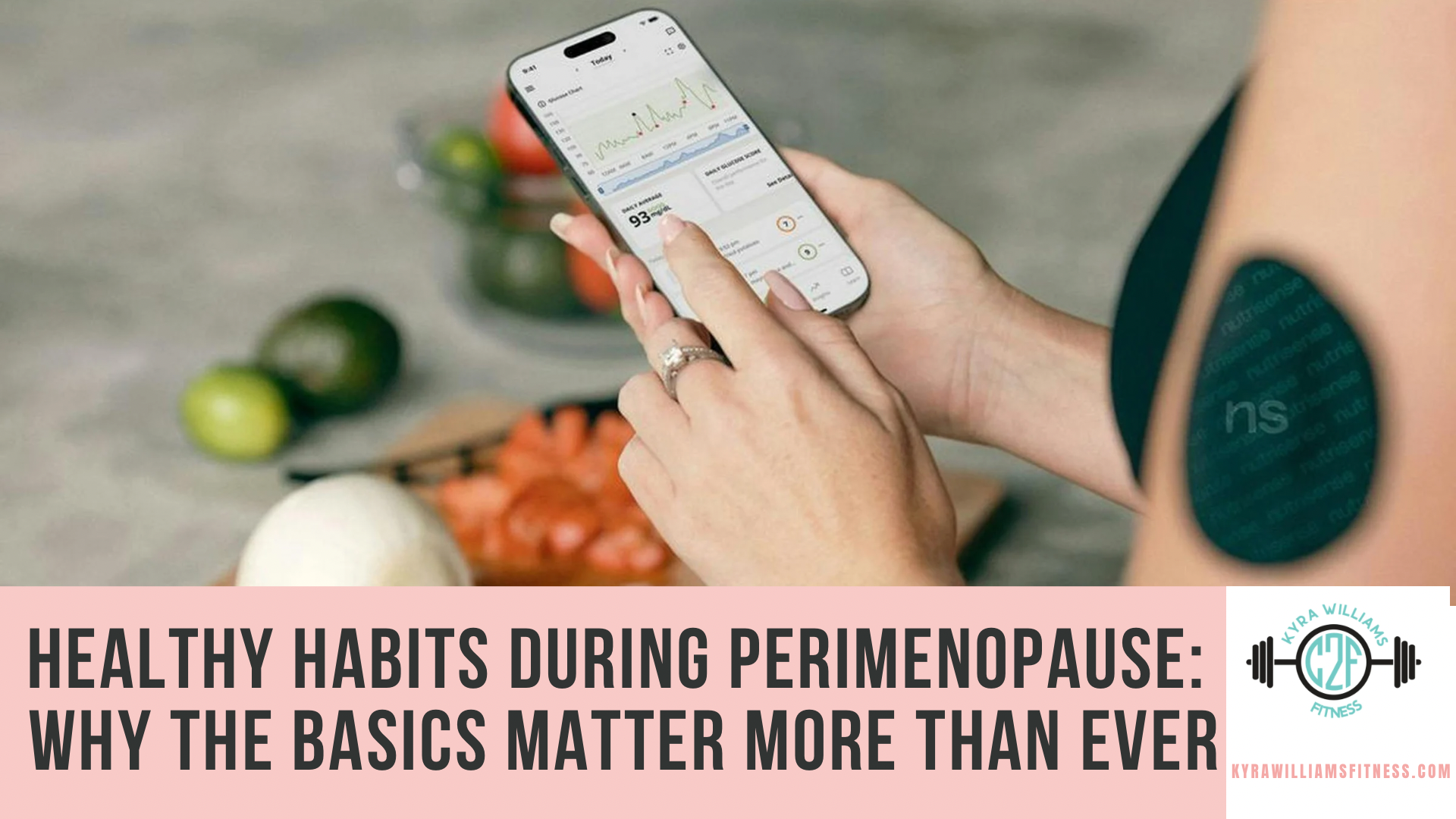
Healthy Habits During Perimenopause: Why the Basics Matter More Than Ever.
When hormones start changing during perimenopause, it’s easy to start looking for a completely different approach to your health. Supplements, testing, hormone support and more targeted protocols may all have a place, but the basics still create the foundation underneath everything else.
Sleep, stress mitigation, digestion, blood sugar regulation, nourishing food and exercise have always mattered. During perimenopause, I find they become even more important because these systems directly influence how well your body produces, converts, metabolizes and responds to hormones.
Sleep
Sleep affects energy, hunger, cravings, mood, blood sugar, recovery and your ability to handle stress. It can also become much more difficult during perimenopause as hormone fluctuations affect body temperature, mood and sleep quality.
Sleep is also closely tied to hormone regulation. Poor or insufficient sleep can disrupt cortisol, insulin sensitivity and appetite hormones, while also making the body less resilient to the natural fluctuations in estrogen and progesterone that happen during perimenopause.
This is one of the first areas I look at with clients. For one woman I’m working with, her sleep quality was actually pretty good, but she simply wasn’t giving herself enough opportunity to sleep. Our focus became creating a consistent bedtime (without her screens!) that allowed 7.5–8 hours, reducing late-night work and stimulation, and protecting that final hour before bed. It really can be that simple.
Stress mitigation
Stress comes from more than a busy schedule. Poor sleep, under-eating, intense training, alcohol, emotional stress and constantly being on the go all contribute to the total load your body is carrying.
That matters hormonally because chronic stress changes cortisol signaling and can affect the communication between the brain, adrenals, thyroid and ovaries. During perimenopause, when ovarian hormone production is already becoming more variable, a high stress load can make symptoms feel even more pronounced.
Sometimes my work with a client includes very simple things like morning daylight, walking, slowing down before meals, better work boundaries and intentionally scheduling recovery. These may seem small, but they can have a huge impact when someone has been asking her body to operate at full speed all day, every day.
Digestion
Healthy digestion matters because you need to break down and absorb the nutrients you’re eating.
Hormone production and metabolism depend on those nutrients. Protein provides amino acids, fats provide building blocks for steroid hormones, and minerals and B vitamins support countless enzymatic processes involved in hormone synthesis and conversion. The gut and liver also play important roles in processing and clearing hormones once they’ve been used.
I have a client right now dealing with significant fatigue alongside chronic digestive issues. Before worrying about further fat loss, our priorities include investigating what is happening with her digestion, making sure she is getting enough protein and carbohydrates, supporting hydration and electrolytes, and using strategic intervention to assure she absorbs the nutrients from these foods. We will eventually get into training, but not until her body can handle those demands.
Bloating, constipation, diarrhea, reflux and changes in stool can all provide useful information about what deserves a closer look and must be considered as part of a well rounded program.
Blood sugar and food
Blood sugar regulation becomes especially important during perimenopause, and balanced meals are one of the simplest tools we have.
Stable blood sugar helps support healthier insulin signaling, and insulin interacts with multiple hormone systems throughout the body. Large swings in blood sugar can also increase stress hormones, affect energy and cravings, and make it harder to maintain the nutrition and recovery habits that support thyroid and ovarian function.
Adequate food matters just as much. Your body needs enough energy, protein, carbohydrates, fats, vitamins and minerals to produce hormones, convert thyroid hormone and preserve lean muscle.
I also recently had a client who wanted to improve her body composition. Before cutting calories, I had her spend two weeks tracking everything she was eating so we could establish a true baseline. From there, the goal was a modest, measurable nutrition plan that preserved protein, strength, sleep, recovery and lean muscle.
That kind of foundation gives us much better information than immediately reducing food intake.
Exercise
Strength training is one of the most valuable things we can do during perimenopause because maintaining muscle and bone becomes increasingly important as we age. Cardiovascular exercise matters as well, and the right combination should support your fitness, metabolic health and recovery.
Muscle is also highly metabolically active. Maintaining and building it improves glucose disposal and insulin sensitivity, both of which support a healthier hormonal environment. Resistance training can also support bone health during a time when changing estrogen levels make bone preservation increasingly important.
For that same body-composition client, the exercise plan was straightforward: continue progressive strength training about three times per week and build more consistency with walking rather than relying on large amounts of high-intensity cardio.
Consistency, progression and recovery are what allow your body to adapt.
The basics are the foundation
Hormone testing, HRT, supplements and more individualized protocols can all play an important role in helping women feel better during perimenopause. They work best when we’re also paying attention to the systems that influence hormone production and function every single day: sleep, stress, digestion, blood sugar, food quality, adequate nutrition, strength, cardiovascular fitness and recovery.
These basics give us a stronger foundation, better information about what is actually going on and a much better place from which to address the more complicated pieces of perimenopause.
If you’re trying to understand your symptoms and want a clearer picture of what may be worth discussing with your doctor, I created a free Lab Interpretation Cheat Sheet to help you understand the most useful labs to look at and what they can tell you. Download it here and use it as a starting point for your next conversation with your healthcare provider.
Your Coach,
Kyra